
Blog
Finding my place: neurodiversity, purpose and a career in financial planning
A little about me
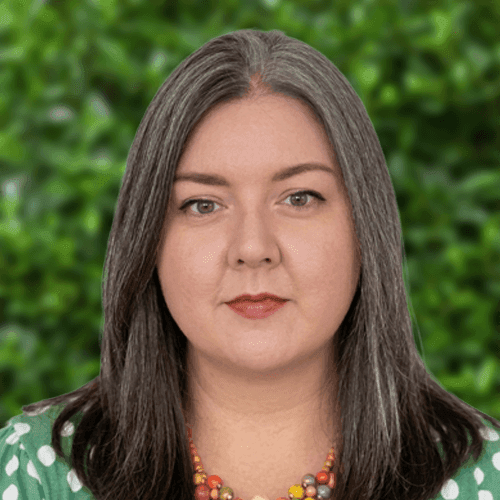
I currently work for Path as a Paraplanner, working towards my Diploma in Regulated Financial planning.
In childhood I had a love of dinosaurs and ancient Egypt, and in my very early years toyed with the idea of becoming a palaeontologist or archaeologist, perhaps the next Howard Carter?
My Dad was a postman, my Mum a nurse until she stopped working when I was young. We did not have a lot of money, my dad worked 12-hour shifts, 6 nights per week just to cover the basic costs of living. I didn’t go abroad until I was 18, and new clothes were a big deal.
I was a rebellious teenager, having grown in a chaotic (clearly neurodivergent now I look back) environment with two sisters and so many animals, ultimately making the snap decision to drop out of college and move away from home. I never returned to full-time education.
When people ask how I ended up in financial services I often say I just fell into it, as so many of us do. That said, I do think perhaps subconsciously I was aware of the vulnerability of us as a family not having much money and had a need to gain understanding and in a way some sort of control over it to avoid falling into the same trap. Now happily civilly partnered we decided not to have children for various reasons, but the risk of financial vulnerability played a part in that decision, as I believe it does for many couples now.
How I came into the financial planning industry
I was in high school, didn’t have a clue what I wanted to do. At that point undiagnosed autistic and ADHD, misunderstood, overwhelmed, and simply trying to survive each day at a time, how could I seriously consider future plans when each day was so difficult?
I loved English literature and art as much as I hated maths, even saying to my high school maths teacher “I don’t know why I need to know this, Mrs White, it’s not like I’m ever going to work in a bank!” – I am clearly no Mystic Meg, any guesses where my first job was?… That’s right, at a bank.
Unaware of my needs as a young neurodivergent woman starting out in the world of work, I attended a meeting with a recruitment agent who kindly said “memorise these words and you’ll get the job”; so, I did. That led me to working for a large telephone and internet bank, in a call centre setting, with open plan offices, bright lights, constant calls, and the worst part – sales.
I was quickly identified as someone who was unable to build rapport with customers and unwilling to even attempt to sell anything I didn’t believe would be in the customer’s best interest. Pairing me with a brilliant, flamboyant, charismatic, sales champion did little to help the situation or my self-esteem and having experienced multiple meltdowns (that at that time I did not understand) I realised that environment was not for me.
Having moved on to other call centre roles, I found myself once again faced with sales, as so many customer service roles seemingly turn into. I was terrible at sales, the old pattern re-emerged but my managers spotted something in me that past ones hadn’t – yes, I couldn’t sell, but I was really good at compliance. I was moved into the compliance team, monitoring the calls of my colleagues to make sure they were fair and compliant.
During my time taking calls I spoke with a customer who was an Independent Financial Adviser. He was lovely and took the time to answer some brief questions I had on his job. He suggested the best way into the world of financial advice would be to start as an administrator, so that’s what I did.
Having started as an administrator in operations, I then moved into becoming an operations manager. I then had an adviser point out that I asked a lot of questions and would likely make a very good paraplanner. I was then given the opportunity to move into a trainee paraplanner position with the same firm.
Following training, I started working as an outsourced paraplanner which was a lot; I was carrying out research and writing reports (my love for English literature paid off!) but this was for multiple businesses, who all had their own ways of doing things and that was difficult to keep on top of. When you work for one business you can generally memorise a lot of what you need to know, such as charges, but this becomes increasingly difficult when you look after multiple businesses.
I began to realise that some of the approaches I encountered didn’t align with my personal values or the kind of work I wanted to do. I knew I needed to either leave the industry or find somewhere that better reflected my values.
Why I find value in it
Regulated financial advice feels a lot fairer to me, and more of a service to customers/clients. The focus is on helping people to achieve their goals, which can be so rewarding when they finally do just that.
Not only do I get to contribute to helping people achieve their financial goals, but I also support our advisers in exploring investments that reflect our clients’ personal values, where that’s important to them. Many of our clients care about more than just financial returns. They want their money to make a positive difference or, at the very least, avoid activities that conflict with their values. Being part of a team that helps clients explore investments reflecting those priorities is incredibly rewarding.
There are so many rules and regulations in financial planning, no one person can ever know everything there is to know so working as a team is a must. Together, we all bring different skills and knowledge to each case, helping us develop suitable recommendations tailored to each client’s individual circumstances, needs and objectives.
Best parts of my job
Every case we work on is different, you hear of various passions people have, causes they wish to support, lives they want to live and we can be an integral part in helping them to achieve that.
Each case presents as a new puzzle which can have various solutions and it’s up to me and my colleagues to explore the options and identify the most suitable approach for each client. I enjoy this part of my job so much that I often leave my desk at the end of the day still thinking about various solutions that could work.
There is so much to learn in financial planning; just when you start feeling like you know what you’re doing something else crops up that you have not seen or considered before. Every person on every level of the business has an experience or some knowledge that others don’t, and this can add value to the cases.
While I would be happy remaining as a paraplanner it is also often used as a stepping stone into becoming an adviser, or into compliance, or investment management. There are areas you can specialise in too once you are qualified, meaning you can choose areas that are of genuine interest to you to study. It really is a life-long opportunity to learn!
Like many paraplanners, I work from home. Having received my autism and ADHD diagnoses in my 20s, I’ve developed a much better understanding of my needs and the working environment that suits me. Being able to control my surroundings, whether that’s listening to music or working in silence, helps me stay focused and work effectively.
The flexibility of working from home and having a four-day week has made a huge difference to my wellbeing. This kind of flexibility can be a lifeline for disabled people, parents and carers alike, helping to make work more accessible and sustainable.
Why Path over other organisations in the financial planning world
I was so excited to discover Path back in 2023; finally, a firm who not only understood ethical investing but focussed on it and shared my passion for it.
A lot of neurodivergent people refer to their strong sense of justice which I can very much relate to both in my personal life and work life. I do believe strongly that what is often described as our “black and white” thinking links into our strong feelings of what is right and wrong, which naturally feeds into our ethics and values. This way of working attracts like-minded people both as colleagues and clients alike which I do feel there was a gap in the market for previously.
This is now the longest I have remained in one job, I have never felt as supported, respected, valued, and understood as I am at Path. Since joining in 2023 I have gladly introduced two of my friends and ex-colleagues to Path, joining the paraplanning team and I intend to continue recommending Path.
An observation I made on joining Path was that it has a diverse team and this is something I believe is integral to building a healthy workplace. We are all so different but share an appreciation and need for fairness, for good client outcomes, and for making a positive difference as individuals, as a company and in the investments we recommend.
Something I would like to say to fellow Autistic and/or ADHD people starting out in the industry; You may not feel like you fit into many environments, don’t be afraid to keep looking until you do, because you will. There are many of us in financial services, some of us more open about it than others but we are here and sometimes it just takes time to find the right fit.
Why what you do is important
When you invest, your money has the potential to do more than simply generate a financial return. It can also support businesses and projects working towards positive environmental and social outcomes.
Our money could be invested in industries and businesses whose activities conflict with our values. Equally, through impact investing, we can seek out opportunities to support businesses and projects tackling environmental and social challenges, from renewable energy to improving access to essential services.
What I particularly love about impact investing is that we can look beyond good intentions and examine measurable real-world outcomes. Where reliable data is available, we can gain a clearer understanding of the environmental and social outcomes associated with the businesses and projects in which we invest.
At Path, we specialise in impact investing, while recognising that everyone has different financial objectives, priorities and preferences. Our team can review your existing investments and explore the options available to you, considering their ethical and environmental characteristics and, where relevant, their measurable impact, alongside costs, risks and features. This helps you make informed decisions about your money in a way that reflects your individual goals and values.
As with all investments, your capital is at risk. Positive environmental or social outcomes are not guaranteed and can sometimes be difficult to measure.
MORE NEWS AND EVENTS
































RISK WARNING
As always with investments, your capital is at risk. The value of your investment can go down as well as up, and you may get back less than you invest. This information should not be regarded as financial advice.