
Blog
Nature: an investment opportunity hiding in plain sight
For many investors, responsible investment has traditionally been framed around avoiding harm: excluding areas such as tobacco, weapons or fossil fuels, while favouring companies with stronger environmental and social credentials.
That approach still has value. But as an adviser focused on positive impact, I think we need to push towards taking the next step. Less: what should we avoid? Increasingly: what solutions can we invest in?
One of the most interesting answers may be nature.
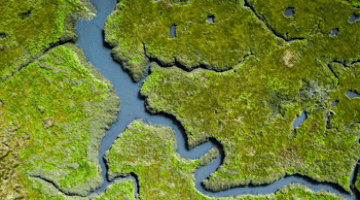
Nature is not simply something we enjoy. It is infrastructure. Healthy soils produce food. Wetlands reduce flooding. Forests store carbon and regulate water. Rivers provide clean water. Biodiversity supports pollination, fisheries and tourism. When these natural systems deteriorate, somebody eventually pays the bill — whether that’s through flood damage to homes and businesses, rising insurance premiums, or the cost of cleaning up polluted rivers.
The scale of the economic case for nature recovery was set out clearly in new research produced by environmental economics consultancy eftec on behalf of the RSPB this summer[1]. The report calculated that investing £5-6bn a year in nature recovery in the UK — closing what it terms the country’s “nature finance gap” — could generate £80bn of new economic activity over the next decade. That’s equivalent to a 15% increase in the size of the entire UK construction sector. The same investment was projected to create 80,000 long-term, skilled jobs, many in rural areas with historically lower employment opportunities, and to unlock benefits worth up to £1 trillion to wider society once things like improved air quality, food security and access to nature are factored in.
Whatever view one takes of the precise modelling behind those figures, the direction of travel is compelling: nature restoration is increasingly being viewed through an economic lens, rather than simply as an environmental cost. As Professor Sir Partha Dasgupta — author of the landmark 2021 Dasgupta Review on the economics of biodiversity — put it, work of this kind represents “policy analysis at its most significant.”
That points towards a potential investment opportunity — although accessing it is currently far easier to describe than to implement. Nature-based investments remain a relatively immature part of financial markets. Many opportunities are small, private, illiquid and difficult to access at the scale required for mainstream portfolios. There is also a shortage of investments with sufficiently established track records, transparent valuations and reliable income streams. As advisers, we therefore have to be realistic: we cannot simply allocate a large proportion of a client’s portfolio to “nature” and expect a diversified, liquid investment solution to appear.
But that doesn’t mean the opportunity should be ignored. Historically, extraction and exploitation have been the primary ways companies have found “value” in nature. Restoration and repair may increasingly have commercial value too.
Robert Gardner, CEO and co-founder of Rebalance Earth [2], a specialist natural-capital asset manager, has been a prominent advocate of treating nature as critical economic infrastructure rather than simply an environmental concern. Rebalance Earth’s approach is to identify projects where restoring natural capital can create measurable economic value and, ultimately, investable cashflows.
The World Bank’s pioneering Wildlife Conservation Bond[3] — often called the ‘Rhino Bond’ — demonstrates one way this could work. The five-year bond helped finance black rhino conservation in South Africa, while investors could receive an additional payment at maturity based on independently verified growth in rhino populations. It is a fascinating example of conservation outcomes being incorporated into the structure of a financial instrument.
For now, however, many retail investors are likely to access the theme indirectly. That is something we continually look for when selecting and reviewing investment solutions for clients with responsible-investment preferences. Water and waste, for example, can provide exposure to businesses addressing fundamental environmental challenges while operating within established, investable markets. Companies involved in water infrastructure, resource efficiency, recycling and waste management can potentially benefit as societies place an increasing economic value on scarce resources.
The message, therefore, is not that every investor should rush out and buy a “nature fund”. It is that nature is becoming increasingly economically important — and financial markets are only beginning to work out how to capture that value. We would like to see investment managers develop more credible and accessible investment products in this area. As the investment universe develops, our role is to identify opportunities where clients can obtain credible exposure without compromising the principles of diversification, liquidity, valuation and risk management.
The future of responsible investing may not be about choosing between returns and nature. It may be about recognising that nature-related risks and opportunities can increasingly influence long-term investment outcomes.
If you’d like to talk through how nature-related themes might fit alongside your existing holdings, it’s a conversation we’re always happy to have.
[1] RSPB/eftec report https://www.rspb.org.uk/media-centre/investing-nature-could-unlock-new-jobs
[2] Rebalance Earth https://rebalance.earth/
[3] World Bank Wildlife Conservation Bond https://www.worldbank.org/en/news/press-release/2022/03/23/wildlife-conservation-bond-boosts-south-africa-s-efforts-to-protect-black-rhinos-and-support-local-communities
Important information: This article is for general information only and does not constitute personal investment advice. The value of investments can fall as well as rise and you may get back less than you invest. References to investment themes or investments are illustrative and should not be regarded as a recommendation to buy or sell any particular investment.
MORE NEWS AND EVENTS



























RISK WARNING
As always with investments, your capital is at risk. The value of your investment can go down as well as up, and you may get back less than you invest. This information should not be regarded as financial advice.