
Insights
Sustainable & Regenerative Agriculture: Investment Considerations and Risks
Why agriculture is gaining investor attention
There are growing concerns around the food we eat and produce: climate change, food insecurity, food waste, emissions, and overfishing. The agriculture and food sector is responsible for roughly a third of global greenhouse gas emissions, and with the world population expected to reach around 10 billion by 2050, these pressures are only set to increase.
Agriculture is often considered an important long-term theme for investors — after all, billions of people need to be fed. Sustainable and regenerative farming methods are key tools in meeting this global challenge, helping food systems become more resilient while reducing environmental impact.
What is sustainable vs regenerative agriculture?
While both approaches often overlap in practice, they have slightly different focus areas:
Sustainable agriculture aims to maintain productive systems while minimising environmental harm and preserving resources for future generations.
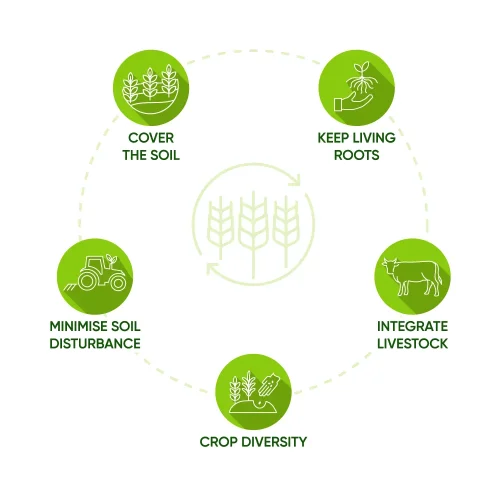
Regenerative agriculture goes further, actively repairing past environmental damage by restoring soil health, maintaining living roots, reducing soil disturbance, and reintroducing biodiversity.
By improving soil health and biodiversity, regenerative practices also contribute to climate mitigation and responsible land use, aligning with global sustainability goals.
In simple terms: sustainable farming preserves the future, regenerative farming fixes the past.
Healthy soil, increased biodiversity, and reduced pesticide reliance rely on practices that balance environmental stewardship with the long-term financial stability of the farm. Sustainable and regenerative approaches often work best together, delivering a larger positive impact over time.
Some research suggests that, when regenerative practices are fully embedded, farmers could see significant improvements in profitability over time, as soil health and productivity improve. However, these outcomes are highly variable and depend on geography, crop type, climate, and other factors.
Agricultural investment: opportunities and considerations
Making the transition to regenerative farming is challenging and carries financial risk for farmers. Targeted investment and external support can help mitigate these risks, but historically, smaller farms prioritising sustainability have had limited access to traditional investment funds. Most agricultural investment has historically focused on large corporates — fertiliser manufacturers, machinery companies, and seed producers — some of which have faced controversy regarding chemical use or land disputes.
Over the last decade, agricultural technology (“AgTech”) has expanded, creating more nuanced investment opportunities.
Examples of agricultural technology innovation:
Automated farm vehicles and GPS-guided machinery (For example, precision seed drills from John Deere allow farmers to optimise seed placement and reduce input usage, improving efficiency while supporting sustainability.)
Vertical farming systems
Bee vectoring for natural crop protection
Soil, water, and crop monitoring sensors
Such innovations aim to support sustainable, efficient, and environmentally sound yields, while also offering potential crossover benefits to other sectors, including construction, life sciences, and health.
The rise in ESG, sustainable, and impact investing has made these opportunities more accessible to investors, for example via thematic funds, green bonds, or impact-oriented strategies. However, outcomes are not guaranteed, and market volatility can affect returns. AgTech investment flows have seen declines in 2023–24, but trends in AI, robotics, and climate-focused innovation suggest potential growth in future years.
Path’s perspective
At Path, we believe that AgTech and regenerative agriculture present both social and environmental impact opportunities. Farmers in the midstream of supply chains can influence both upstream and downstream outcomes, and as technology becomes more affordable and widespread, it may benefit not only large corporates but also smallholder farmers in regions most vulnerable to climate change and drought.
Success depends not only on machinery and technology but also on access to education, support networks, and data-sharing platforms. At Path, we focus on both sides — mechanical innovations and industry support — through core portfolios and early-stage venture capital options. Learn more about our investment philosophy here.
Regenerative agriculture may take time to become a standard part of global equity funds. We believe our approach positions us to identify opportunities as this sector grows, aligned with several UN Sustainable Development Goals, including:
Zero Hunger
Responsible Consumption and Production
Climate Action
Life on Land
Find out more
If you would like to understand how sustainable agriculture and other long-term investment themes may be appropriate for your individual circumstances, you can arrange a free initial consultation with a member of our adviser team.
Important information: This article is for general information only and does not constitute personal financial, investment, tax or legal advice. Tax treatment and suitability depend on individual circumstances and may change. Investments can fall as well as rise in value, and you may get back less than you invest.
RISK WARNING
As always with investments, your capital is at risk. The value of your investment can go down as well as up, and you may get back less than you invest. This information should not be regarded as financial advice.